
As featured in the May 2026 Digger Magazine article by Jon Bell, with contributions from Dr. Michael Brownbridge, Technical Service Manager at BioWorks.
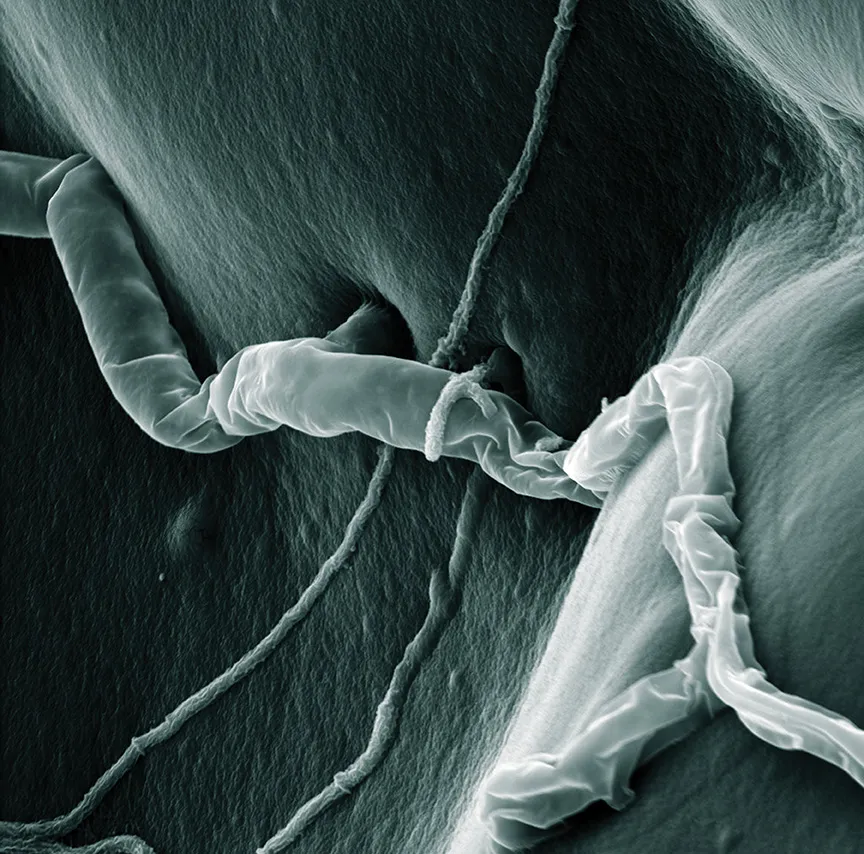 If you don’t exactly know what biofungicides are and how they work, Michael Brownbridge has a clear and simple way to describe at least some of them.
Picture a plant as if it were a hotel. Say a part of that plant — a leaf or a petal — has died. That site on the plant can essentially be seen as an open hotel room, available to two kinds of guests.
One guest type might be a pathogen like Botrytis. It could move in, establish a foothold, dine on all the nutrients and eventually kill the plant.
The other type of guest might be a horde of beneficial microbes, like those in certain biofungicides. They could check in, keep the nutrients for themselves and occupy all the rooms so the Botrytis has nowhere to go.
“It’s 100 percent preventative,” said Brownbridge, senior technical services manager for BioWorks, an integrated plant health products company that makes biological control products to help fight diseases and pests. “They’re not allowing any space at a site for any of these noxious organisms to come in. The hotel is kind of the simplest analogy that I can use.”
It’s an analogy that works well to describe how some biofungicides work. And work they do. While not a brand-new approach, biofungicides have become part of more and more pest and disease management programs at nurseries, farms and other agricultural operations. They have proven effective at fending off diseases, stopping the progression of established pathogens, and producing healthier, higher-yield crops.
And because they rely on natural organisms rather than chemicals, they can be better for the environment and nursery workers.
“I think it’s more important than ever that growers consider utilizing some of these materials,” Brownbridge said. “I really think it’s the future of agriculture.”
Biofungicide basics
According to the University of Massachusetts Center for Agriculture, Food and the Environment, biofungicides are blends of living organisms — fungi and bacteria — that “control the activity of plant pathogenic fungi and bacteria.” They do so naturally by producing antibiotic substances, parasitizing and competing with other fungi and even helping some plants develop systemic resistance to various pathogens.
There are multiple kinds of biofungicides. Some address foliar diseases. Some take on soil-borne diseases. Some are sprayed on plants, while others get applied to the roots at propagation or soon thereafter.
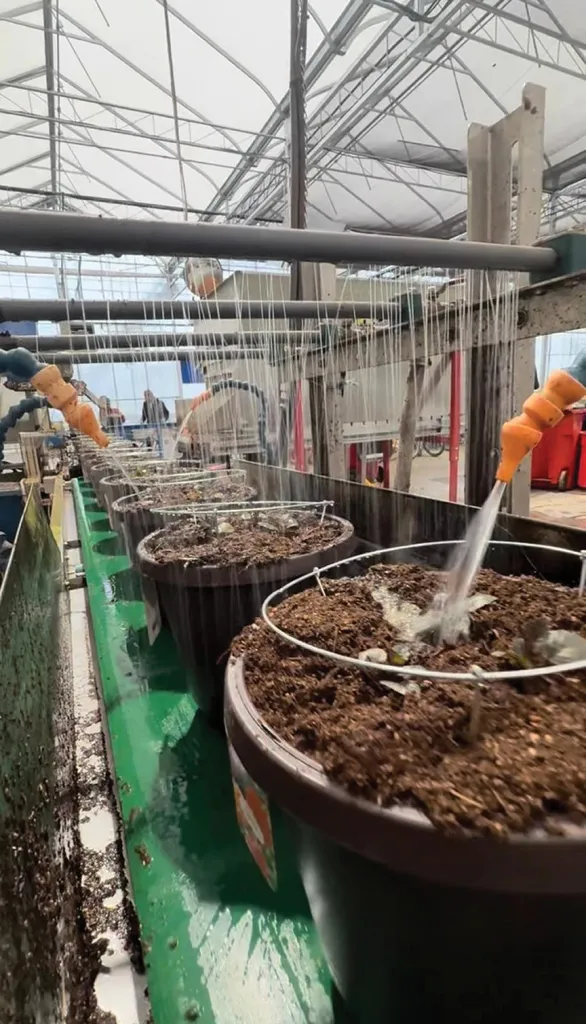 According to Brownbridge, biofungicides can be categorized by their various modes of action. Some that are used to treat foliar diseases produce biproducts that are antagonistic to pathogens. Others, like those from Brownbridge’s hotel analogy, outcompete diseases for space and nutrients while causing no harm to the plant. Those can be for foliar diseases, or they can be applied to roots to help fend off soil-borne pathogens. Some of the foliar ones will even produce enzymes that break down the cell walls of disease-causing organisms after they have become established, preventing them from spreading any further.
“They can sort of utilize the bad fungi as a food source so they’re not allowed to grow anymore,” he said. “It’s a nice ecological function that the beneficial microbes bring in.”
There’s another class of natural fungicide products based on potassium bicarbonate. These destroy the cell walls of various plant diseases. And finally, there’s yet another group of products that don’t have any impact on the disease organisms but instead induce a resistance response in a plant.
“So the plant is actually adapting itself against infection,” Brownbridge said.
In the field
Ronald Tuckett is the plant protection manager for national wholesale grower Monrovia Nursery Company at its large farm in Dayton, Oregon. As such, he oversees the pest control program along with irrigation and landscaping. The nursery takes an integrated pest management approach.
“It’s using everything — chemical rotations, biofungicides, hand weeding and spraying — every strategy or method you can to control pests,” Tuckett said.
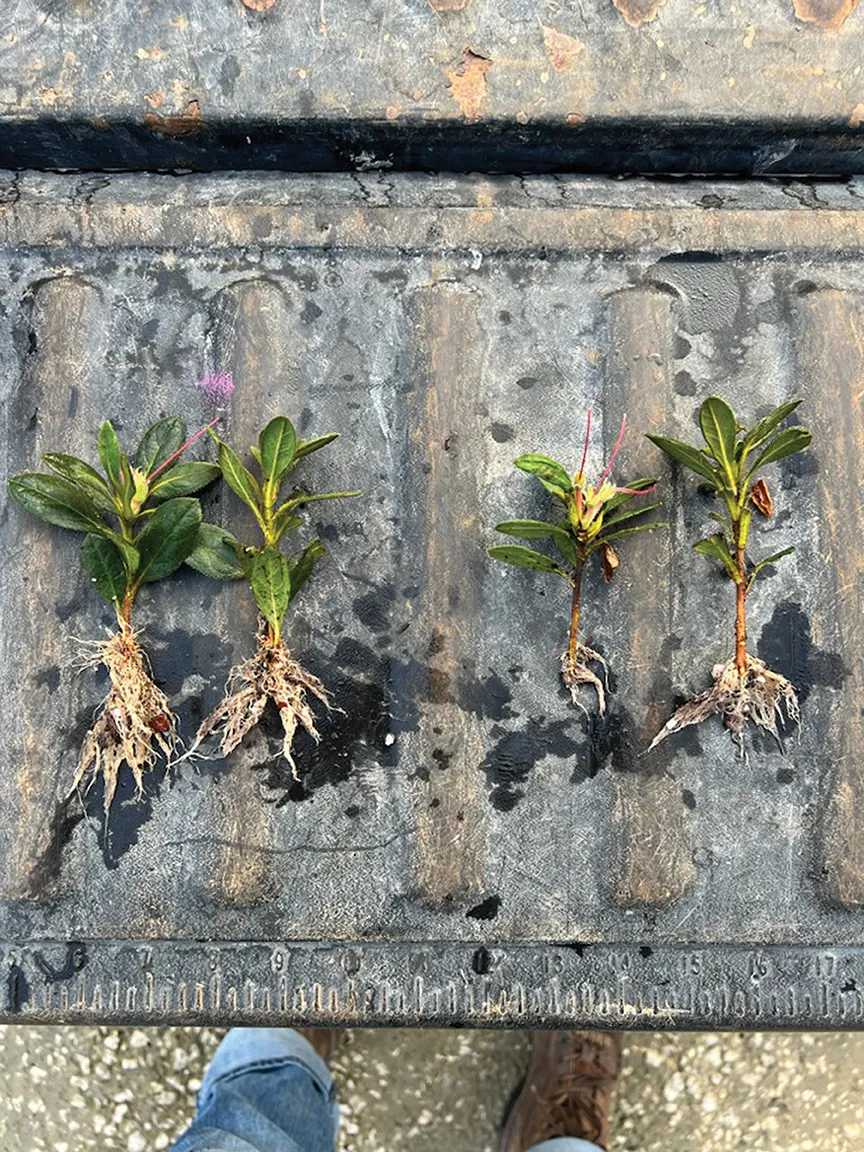
Monrovia has had luck with biologic products like CEASE, which destroys pathogen cells and creates a natural barrier on leaves, and Triathlon, which helps control pathogens and diseases like Botrytis and powdery and downy mildew. Tuckett also said in the past, the nursery had Botrytis on its hellebores. They tried a biofungicide from BioWorks called BotryStop WP, which works by outcompeting botrytis for space and nutrients, to great effect.
“We sprayed it and we were done,” Tuckett said. “That was the antidote.”
Jan Moss, plant health manager at larger wholesale grower Kraemer’s Nursery in Mt. Angel, has also found good luck with BotryStop.
“It’s safe and won’t affect the plant,” he said. “And also, it’s not visible, which is nice. There’s no physical blemish for a consumer to get upset about.”
Moss said using BotryStop is simple, as well, because it’s obvious when it needs to be applied. With some other fungicides, whether bio- or chemical-based, getting the application timing right can be tricky because you often can’t see what a plant needs to be treated for.
“I think the reason it works well is because it is really obvious when to spray it,” Moss said. “You just go out there and you look at the plant. You see the dead tissue, and you just spray it.”
Brownbridge said early application is key to biofungicides. Even if you can’t see signs of a disease, time is of the essence.
“The earlier we can get them on, the better,” he said. “We’re looking to protect the plant and prevent it from getting a disease. That’s sort of contrary to how the industry has been for years, which has been —see a pest, see a disease, react to it. That’s where chemistry has done such a good job. But using biologicals, it’s a shift of mindset, but sometimes you don’t see a whole lot of disease up front.”
Kraemer’s is also trying biofungicides on some of its fruit trees, which have shown signs of the bacterial disease fire blight. Moss said the one they’re using is designed to out-compete pathogens by colonizing tiny wounds and keeping the disease out. The treatment won’t leave any visible residue, which is important to Kraemer’s, as the nursery sells ornamental trees to the likes of Home Depot and other large retailers.
“Our trees can’t look all messed up from whatever spray I’ve put on them, so I’ve pretty much gone to a biologic program on that,” Moss said.
Patrick Peterson is a sales specialist and fertilizer consultant with the J.R. Simplot Company in Portland, Oregon. He said some effective biofungicide products boast about how many spores they have in them, but they often neglect to note other beneficial properties that can be good for the health of plants, roots and spores.
“They might mention that it has millions of spores, but they don’t often mention that it includes a bunch of byproducts that are good for the spores,” he said. “So you’re getting the spores and some of the other junk —but the junk works really well.”
Peterson also noted that many biofungicides can be safer for nursery staff to use than chemical products. For example, BotryStop has a restricted entry interval — the amount of time a crop is off-limits after an application — of just four hours. Many chemical-based products can range from 12 to 48 hours.
“With biologicals, there’s little to no deleterious effect,” Peterson said.
In the rotation
That said, biofungicides are not without their limitations, nor do they fully replace chemical products. Instead, most nurseries have found that trying a variety of different products — a mix of biologic and chemical — and different rotations reaps the best rewards.
“I think a range is the best option,” said Renata Gandra, IPM manager for Van Belle Finished Plants, a larger wholesale grower in Abbotsford, British Columbia, Canada. She added that it’s also important to know when and where to apply biofungicides based on the various climate and temperature zones.
“One of the benefits of these biological materials is that they are good in their own right,” Brownbridge said, “but they’re also really, really useful products to use in a resistance management program, where they can be used in a rotation with synthetic chemistry. Integrating the biology with chemistry is a really great way to help preserve the activity in chemicals, while also getting the benefits of using biology.”
As for the future, research is underway to find even better biofungicides and improved formulations. Brownbridge said there have been some promising new advances in the world of pest control with products derived from essential oils — a field he once dismissed but, he said, one he has since “eaten my hat on.”
He also said it’s clear that biologic products are clearly the way the agriculture industry is going for all kinds of reasons, including cost, environmental impact, safety and efficacy.
Brownbridge said he was at an agricultural conference in February where a speaker asked the audience of growers how many new chemistries they’d been introduced to that day. There had only been one, and it had taken 15 years — and $500 million — to bring the product from discovery to market. Meanwhile, at least 8 to 10 new biologicals had been introduced.
“So his point was, start integrating biologicals, get comfortable with them,” Brownbridge said. “And not necessarily as standalone products, but getting them integrated, because that’s where agriculture is headed.”
For more information:
BioWorks
Michael Brownbridge, Sr. Technical Services Manager
Michael.Brownbridge@bioworksinc.com
Source: https://diggermagazine.com/nurseries-fighting-back-with-bio-blend/
Download a pdf of the original article: Digger Magazine PDF