
Written by: Dr. Michael Brownbridge
Sr. Technical Services Manager
Bioworks, Inc.
Biological products – what are they and why use them?
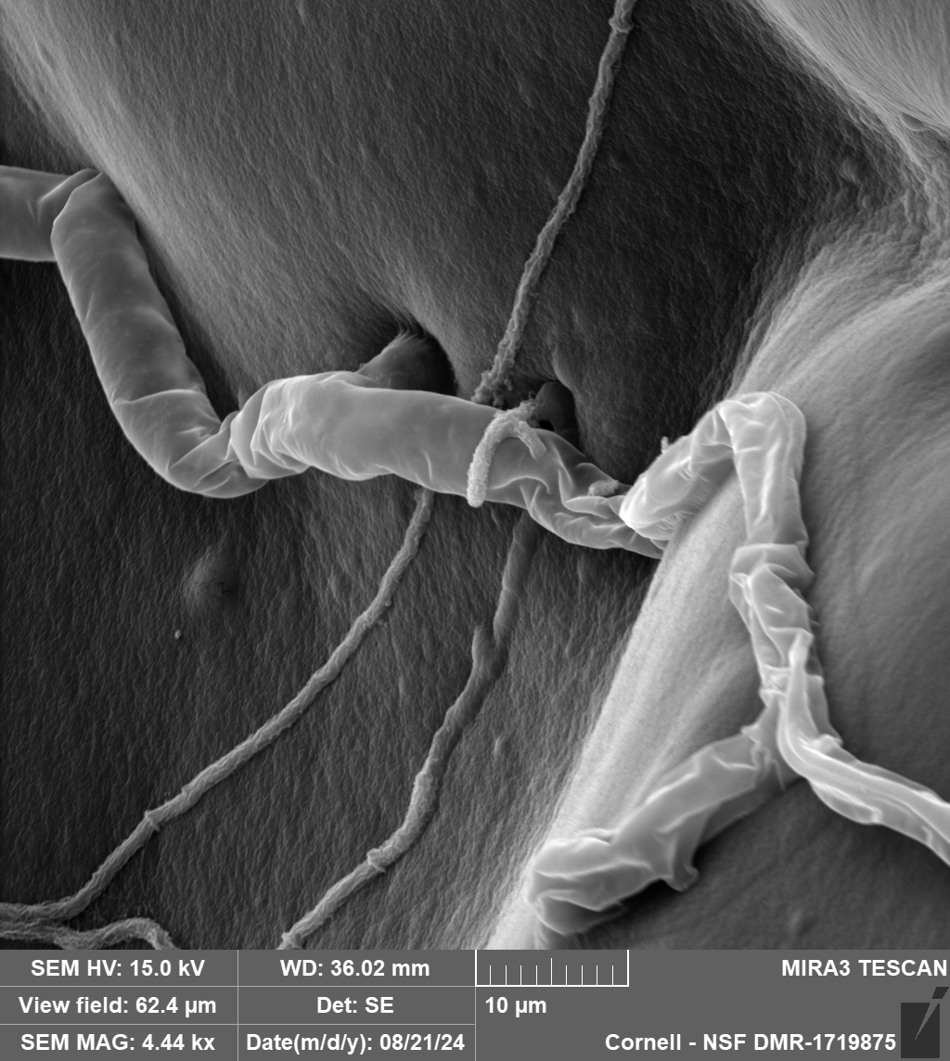
Figure 1. Trichoderma harzianum T-22 strain parasitizing a strand of Rhizoctonia solani.
Biological inputs in the form of biopesticides and biostimulants offer diverse benefits for plant health. While there are commonalities in the benefits each may provide to the plant, the terms describe very different materials. A primary difference being that biopesticides are EPA registered plant protection products and the only ones that can make pest or disease control claims on the label. Biopesticides help us protect plants, whereas biostimulants are largely used to drive the plant’s metabolism in ways that help protect it against abiotic stress, thereby enhancing plant health and resilience.
Plants are challenged by a range of biotic (living) and abiotic stresses such as extremes of temperature, drought, flooding/waterlogging, pH, salinity, nutrition (too much, too little) and a host of other factors. While effects may be transient and plants recover just fine, others have a lasting impact on plant performance; further, abiotic stress often renders plants more prone to biotic stress, namely diseases and pests.
How can we protect plants from diseases?
Let’s switch gears a little here and consider disease management through the lens of the disease triangle: Infection requires the presence of a virulent pathogen at high enough levels to infect a healthy plant; the host plant must be susceptible to the disease; and environmental conditions must favor disease development. The disease will only progress if all three of these elements are satisfied concurrently. If we eliminate or reduce any one of them, we significantly reduce the likelihood of disease developing. One way to reduce or manage pathogens is by using chemical or biological fungicides (biofungicides). How do these work?
Biofungicides used for foliar diseases have several modes of action. Streptomyces and Bacillus bacteria produce metabolites that disrupt the cell membranes of pathogenic fungi and bacteria (antagonism), causing cells to collapse; these compounds are incorporated into commercial formulations. The biocontrol fungus in BotryStop® aggressively colonizes compromised or dead plant tissues, out-competing diseases like Botrytis for resources at these sites, so-called competitive exclusion. Biochemical fungicides like potassium-bicarbonate have a physical mode of action, desiccating fungal spores and mycelia; whereas Polyoxin D zinc salts, derived from Streptomyces, inhibit formation of chitin, an essential component of fungal cell walls, thereby inhibiting growth. And last, some botanical and microbial biofungicides induce resistance, stimulating production of anti-microbial compounds by treated plants that inhibit bacterial and fungal pathogens.
Microbial biofungicides used to protect plants against root diseases typically have two or more modes of action, protecting plants via a combination of competitive exclusion, antagonism, their capacity to induce plant resistance, and parasitism (Fig. 1). From this point, the focus will primarily be on root health, and the role of biofungicides and biostimulants in promoting root (and plant) health.
Why is root health so important?
An article in the June 18, 2025 edition of CEAg World (1) succinctly summarizes the WHY, and I’ll paraphrase ‘Root systems are the engines of nutrient and water uptake, hormonal signaling, and stress tolerance… when problems emerge, they often appear in the canopy, yet they are symptoms, not causes.’ It goes on to discuss the importance of physical and biological variables (especially microbial interactions) to plant health ‘Stronger roots mean healthier plants, more consistent yields, and better returns for every square foot.’ Stating the obvious if you think about it, but it frames the discussion around the use of biological products to influence and benefit plant health through their application into the root zone.
Biostimulants and how they work
Back to the disease triangle. One of the ways we can make plants less susceptible to disease is by reducing plant stress. Biostimulants can play an important role in this through their influence on microbial activity and other processes that occur in the rhizosphere, the thin film of soil that surrounds plant roots where nutrient uptake, and other important physiological, chemical, and biological activities primarily occur that in turn can invoke beneficial plant responses or influence the root microbiome. While some are best suited to outdoor crops, others have applications in greenhouse and nursery crops.
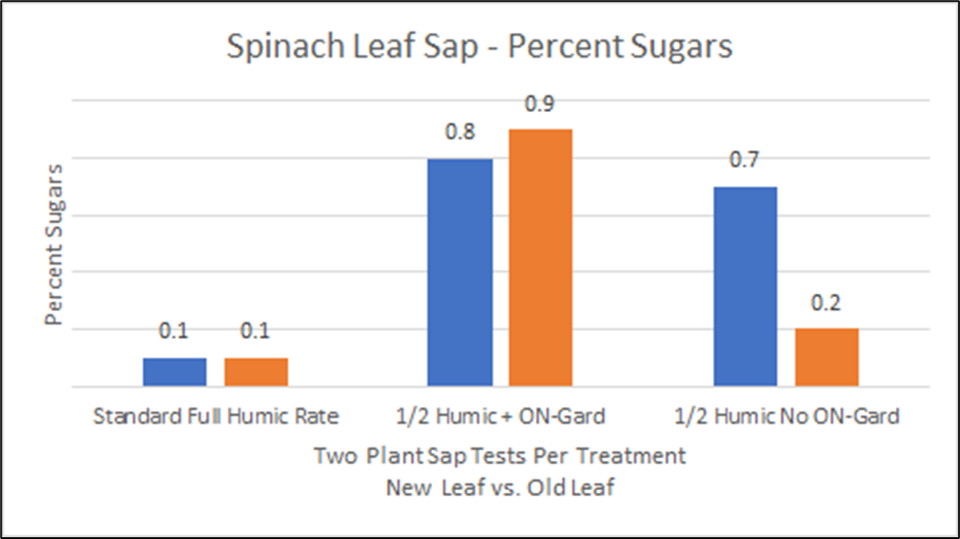
Figure 2. Effect of protein hydrolysate (ON-Gard) on percent sugars in spinach leaf sap at harvest. Chef’s Garden, Huron, OH.
Humates are sourced from non-renewable sources like soft coals or lignite, or renewable sources like peat, composts and vermi-composts. Plant effects result from the interplay between the humic substances, soil microbes and plant roots. It’s important to note that the source materials they are derived from, and the way in which they are manufactured has a tremendous impact on their consistency and effectiveness; research suggests that humic acids derived from renewable materials invoke more consistent plant responses.
If you’re interested in learning more about these substances, and their potential role in enhancing plant health and resilience, Canellas et al. (2) wrote an excellent review article. Although most of the examples cited are from outdoor crops, the same principles can be applied to benefit greenhouse and nursery ornamentals.
Seaweed extracts are complex mixtures of biostimulatory compounds, applied to plants via root drench, foliar spray, or a combination of both. They or their breakdown products elicit defense responses to abiotic stresses (drought, salinity, cold); induce phytohormones that can stimulate root growth, prolong flower set and fruiting, and lead to better fruit quality. Seaweed extracts also promote beneficial microbial populations and diversity in the soil, which provide additional plant benefits (enhanced nutrient availability, suppression of harmful species, improved soil structure, aeration, and porosity). See below (3, 4) for articles documenting benefits of seaweed extracts on plant health and resilience.
Microalgae. A more recent addition to the biostimulant fold, this was facilitated by the development of methods to ferment large quantities of these microscopic photosynthetic organisms in a very cost-effective manner. Once preserved, microalgae are added to the soil to feed and enhance the native microbiome, with resulting plant benefits coming from the improved, functional microbiome, particularly in soils with low organic matter.
Chitosan is a water-soluble polymer derived from chitin, largely sourced from the exoskeletons of crustaceans (like shrimp, crab, and lobster). As a biostimulant, it can have a variety of beneficial effects on treated plants and has some fungicidal activity. The source materials used and the way in which chitosan is manufactured and formulated affects solubility and efficacy and creates variability in the composition and efficacy of commercial products.
Protein hydrolysates are derived from plant and animal proteins, which are broken down using chemical, enzymatic, or microbial fermentation methods to produce mixtures of amino acids, oligopeptides and polypeptides. Amino acids and oligopeptides are readily taken up by plants, via the leaves or roots, affecting different metabolic pathways depending on the plant’s nutritional status or stress. They can enhance plant growth, productivity and resilience. The polypeptides provide a source of C for microbes in the soil, enhancing microbial communities around the roots, leading to improved nutrient availability, acquisition and soil structure. Their use can also improve the nutritional value and quality of fruits and vegetables through elevated brix and enhanced levels of beneficial phytochemicals.
Protein hydrolysates are versatile materials in the way they can be applied to the crop, and the benefits they can bring at different times of the crop cycle. For example, if unrooted or bare root transplants are dipped in a solution prior to planting, the amino acids and peptides are rapidly absorbed into the transplants as they re-hydrate, helping them acclimate and recover from transplant shock faster, with the net result that transplants push out roots faster and establish faster, leading to more vigorous and productive plants. Combined use of protein hydrolysates with other biostimulants can also be beneficial. In the example shown (Fig. 2), application of ON-Gard together with humic acid (at half the rate normally applied) led to elevated sugar levels in spinach leaves.
The raw material and production process used to manufacture protein hydrolysates influences efficacy. Although products derived from plant or animal proteins provide the same range of amino acids, the amino acid profile is different. Overall, products sourced from plant proteins by enzymatic hydrolysis yield an amino acid profile that provides more of the essential amino acids required for plant metabolism and growth, that are more readily available to the plant and deliver the most consistent plant responses.
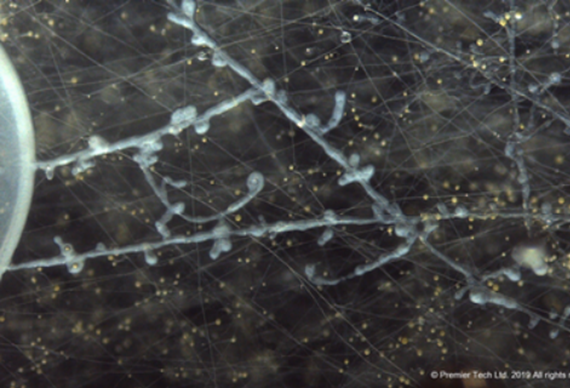
Figure 3. Bacillus pumilus forming a biofilm along mycorrhizal hyphae. Image courtesy of Premier Tech, Rivière-du-Loup, Quebec.
Plant growth promoting microbes live in the rhizosphere of the plant root and actively enhance plant growth and health. They achieve this through various mechanisms, including production of metabolites that are involved in plant signaling, and induce various other mechanisms which collectively increase in planta production of compounds that confer abiotic stress tolerance. Others can fix nitrogen, or solubilize phosphorus and other minerals such as potassium, which is linked to salt-stress tolerance.
Several Bacillus strains are known to boost plant growth and root mass, while others can enhance drought tolerance in ornamental and field crops. As the Bacillus strains colonize plant roots they form a biofilm over the root surface (Fig. 3). The biofilm helps retain soil moisture around roots during drought events, and the bacteria secrete amino acids, antioxidants, phytohormones and more, that, among other things, reduce effects of oxidative stress on cells, regulate osmotic balance to reduce water loss at high temperatures, and upregulate genes that promote formation of water channels in the roots, increasing water transport efficiency within the plant. Might they even improve water use efficiency and allow plants to be grown with less water?
In addition to helping plants tolerate drought stress under field conditions, Bacillus spp. and other soil bacteria, e.g., Pseudomonas spp., can enhance plant resilience through shipping (when plants may be subject to cold or heat events, water stress, low light conditions and often low nutrient levels over time), and at retail, where regular watering may be a luxury! Consider too, their potential use in the production of ‘living’ lettuce and herbs; can they improve shelf life and thus reduce shrink and food waste? Maintaining product quality despite these challenges, especially with ‘pay by scan’ becoming so prevalent for big-box stores, and concurrently enhancing the end consumer experience is important to generate repeat and not just one-time customers. Further, as we look to the future, it is increasingly important to use measures that enhance plant resilience in the face of weather extremes.
Multi-functional microbes
While many Bacillus, Trichoderma and Streptomyces species and strains have biostimulant properties, few have the additional capacity to suppress plant diseases. Those that serve as biofungicides, though, also have biostimulant properties that help plants cope with and recover from abiotic stress events; they can stimulate root growth and development, proliferation of root hairs which enhance plant access to water and nutrients; and solubilize macro- and micro-nutrients in the soil, making them more biologically available to plants and enhancing their assimilation within the plant.
Several commercialized strains of Trichoderma are well known for their ability to stimulate root growth, lateral branching and root hair development. Rooting and growth performance benefits have been observed across a range of vegetables, ornamentals, woody perennials, succulents, cacti and herbaceous perennials.
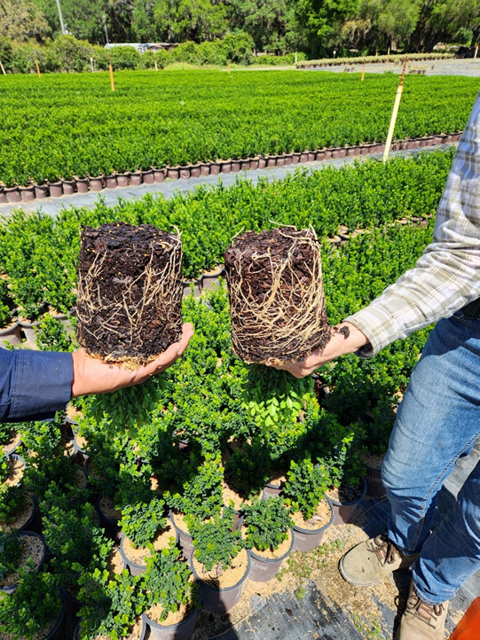
Figure 4. Enhanced root growth and stress tolerance in ‘Baby Gem’ boxwoods, Alabama. Boxwood grown using ‘standard’ protocols and conventional fungicides (left) vs boxwood grown with RootShield® PLUS. Media pre-treated with RootShield PLUS granules or WP post-transplant, and ON-Gard.
Co-application of biofungicides and biostimulants
Biostimulants and biofungicides can confer multiple benefits to plants when applied alone. Does it make sense to apply the two together? Do they fight, or do they work nicely together in a program? In general, application of biostimulants like seaweed extract, humic acid, chitosan and microalgae will stimulate the native microbiota and enhance microbial activity on and around plant roots. Their co-application to the soil with microbial biofungicides can have similar positive effects on their prevalence and activity. For example, microalgae have a positive, stimulatory effect on beneficial bacteria and fungi, like Pseudomonas, Bacillus and Trichoderma. Fig. 4 shows how growth of Trichoderma was dramatically enhanced on soil agar amended with microalgae (Phycoterra).
Studies have shown that plant-growth promoting Bacillus spp. often occur at higher levels in the rhizosphere following application of Trichoderma-containing products like RootShield® PLUS. Some publications indicate synergy between the two in terms of improved disease control and plant performance (5, 6).
Are microbial biofungicides compatible with other beneficial species like mycorrhizae? For most Trichoderma and Bacillus spp., yes, they can be effectively used together with mycorrhizae. In fact, research suggests that they typically complement each other in the soil, with plants benefiting from the services that both organisms can deliver (7, 8).
Nurseries in Alabama, Florida and Texas have suffered significant losses in boxwood production due to heat stress and associated diseases like Fusarium and Phytophthora, despite implementing chemical programs. In one of these nurseries, 10% shrink was considered ‘an acceptable cost of doing business.’ That’s fine, until you consider the nursery was producing around 500,000 one-gallon pots; that’s losses of 50,000 plants. Incorporation of Trichoderma and the protein hydrolysate, ON-Gard, to the growing media dramatically improved root and plant health and reduced losses to <1% (Fig 5). The polypeptides in ON-Gard serve as food for Trichoderma, and there’s field evidence to show that protein hydrolysate promotes Trichoderma growth in the rootzone of plants treated with the fungus. This can be particularly important in soils with low organic matter content, where low C levels can limit establishment and performance of beneficial microbes.
The value of biologicals in production
Biologicals, biostimulants and biofungicides, are versatile, multi-functional products and excellent additions in an integrated plant health management (IPHM) program. Biofungicides have proven efficacy, bring unique modes of action to a program which is essential for resistance management, and can enhance plant growth performance. Their short REIs mean they can be applied with minimal disruption to day-to-day crop management activities. Biostimulants bring additional advantages to plant health and resilience, and use of these materials can help address some of the biggest challenges facing the horticultural sector today in a very cost-effective way.
Further reading
- Brandan A. Shur. Is rootzone a bottleneck in CEA? CEA Ag World, June 18, 2025. https://www.ceagworld.com/greenhouse-produce/is-rootzone-a-bottleneck-in-cea/
- Canellas et al. 2015. Humic and fulvic acids as biostimulants in horticulture. Scientia Horticulturae 196: 15–27. http://dx.doi.org/10.1016/j.scienta.2015.09.013
- Battacharyya et al. 2015. Seaweed extracts as biostimulants in horticulture. Scientia Horticulturae 196: 39–48. http://dx.doi.org/10.1016/j.scienta.2015.09.012
- Hernández-Herrera et al. 2022. Seaweed extract improves growth and productivity of tomato plants under salinity stress. Agronomy 12, 2495. https://doi.org/10.3390/agronomy12102495
- Poveda & Eugui. 2022. Combined use of Trichoderma and beneficial bacteria (mainly Bacillus and Pseudomonas): Development of microbial synergistic bio-inoculants in sustainable agriculture. Biological Control 176: 105100. https://doi.org/10.1016/j.biocontrol.2022.105100
- Izquierdo-García et al. 2020. Trichoderma virens Gl006 and Bacillus velezensis Bs006: a compatible interaction controlling Fusarium wilt of cape gooseberry. Scientific Reports 10:6857. https://doi.org/10.1038/s41598-020-63689-y
- Martinez-Medina et al. 2009. Interactions between arbuscularmycorrhizal fungi and Trichoderma harzianum and their effects on Fusarium wilt in melon plants grown in seedling nurseries. J Sci Food Agric 89: 1843–1850. DOI 10.1002/jsfa.3660
- Colla et al. 2015. Co-inoculation of Glomus intraradices and Trichoderma atroviride acts as a biostimulant to promote growth, yield and nutrient uptake of vegetable crops. J Sci Food Agric 95: 1706–1715. DOI 10.1002/jsfa.6875.